Which sheet of a workbook holds the target samples. More...
#include <QStringList>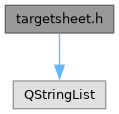
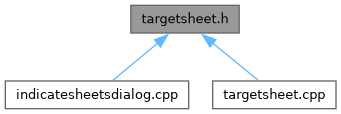
Go to the source code of this file.
Functions | |
| int | GuessTargetSheet (const QStringList &sheets) |
| Index of the sheet whose name says it holds the target samples. | |
Detailed Description
Which sheet of a workbook holds the target samples.
Only one group in a project is the target; every other group is a source group. Which one it is cannot be read from the data, so the user says so when importing a workbook, and the answer is stored in the project file.
Getting it wrong is costly and quiet. A source group put in the target's place is left out of every source list in the program, because those lists hold the source groups only, and the unmixing then runs against its samples instead of the real target samples. Both look like the program misbehaving rather than like a wrong setting.
Definition in file targetsheet.h.
Function Documentation
◆ GuessTargetSheet()
| int GuessTargetSheet | ( | const QStringList & | sheets | ) |
Index of the sheet whose name says it holds the target samples.
Used to preselect a row in the import dialog. A workbook's sheet order says nothing about which sheet is the target, so the sheet is looked for by name instead: "target", "sink" or "mixture", matched as a substring, ignoring case and surrounding spaces.
Returns -1 unless exactly one sheet matches, so an ambiguous workbook (say, "Target" and "Target old") preselects nothing and the choice stays with the user: no guess is better than a wrong one.
- Parameters
-
sheets Sheet names, in the order they are shown
- Returns
- Index into
sheets, or -1 if no single sheet matches
Definition at line 6 of file targetsheet.cpp.
References name.
Referenced by IndicateSheetsDialog::Populate_Table().